Synectics Solutions
Industry
Fraud prevention technology and risk intelligence
Team
Cross-functional team (Engineers, Business Analysts, Product Manager, QA Testers, Data Scientists)
Project outline
Introduce a new product that detects fake and suspicious documents and automatically flags the cases that require the most attention.
Introduction
With the advancement of AI tools, document and image fraud has become increasingly common. Investigators have encountered a growing number of forged or manipulated documents that were difficult to identify using traditional verification methods.
Investigators needed a faster and more reliable way to assess the validity of a document without additional load to their already complex workflow.
The Challenge
Through in-depth user research, we found that document and image verification traditionally relies on manual inspection and cross-checking, which is extremely time-consuming and inefficient for investigators.
Investigators often have to switch between multiple products and screens to extract and compare data from files, increasing cognitive load and significantly extending investigation time.
The Goal
We identified the need for a single product that consolidates these tasks. By incorporating AI, the solution is to speed up workflows but also aid investigations by detecting inconsistencies that may be missed by the human eye. The experience will provide a clear overview of potential fraud indicators, while allowing investigators to update or comment on them during deeper manual analysis, if required.
The Solution
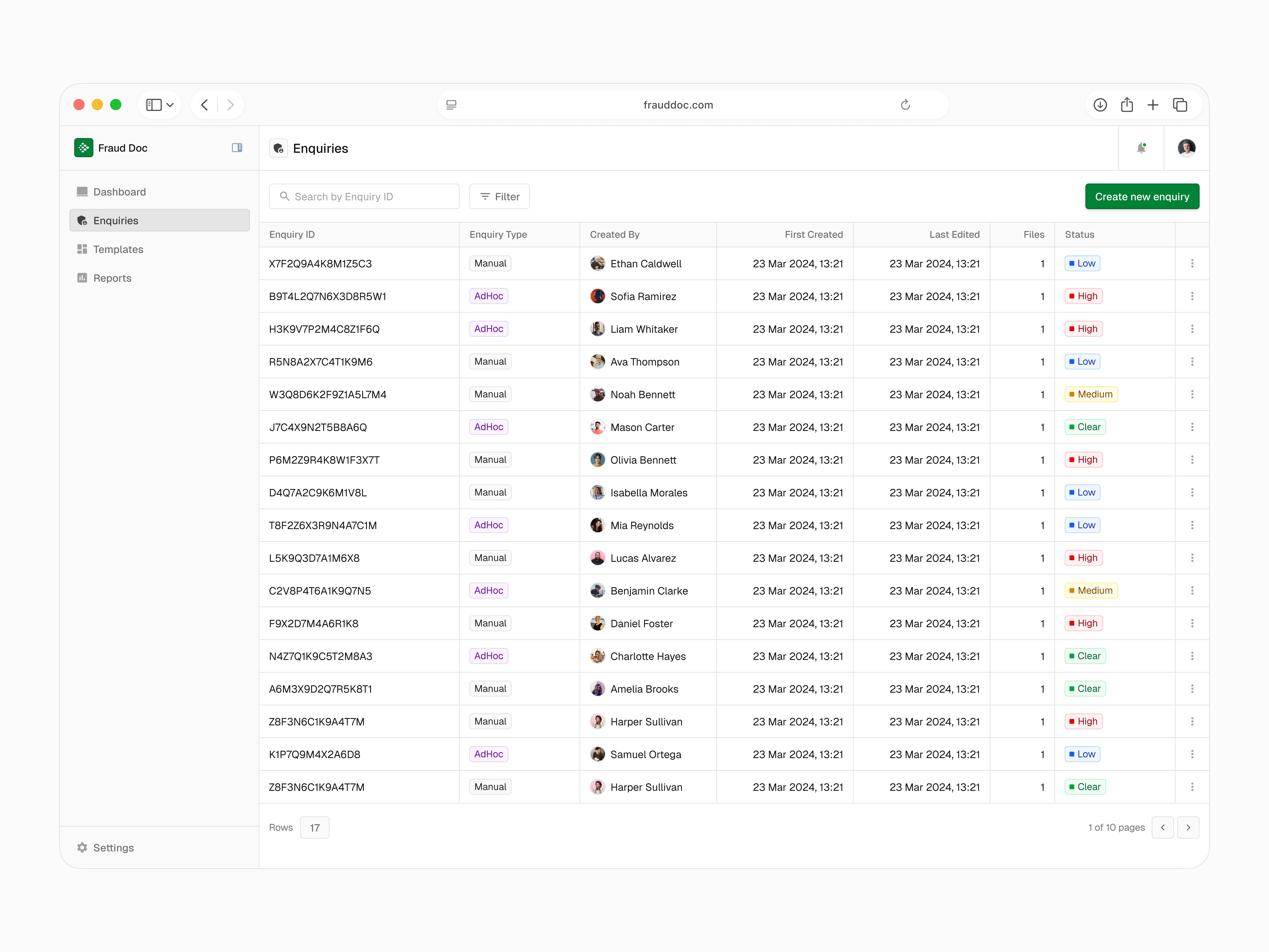
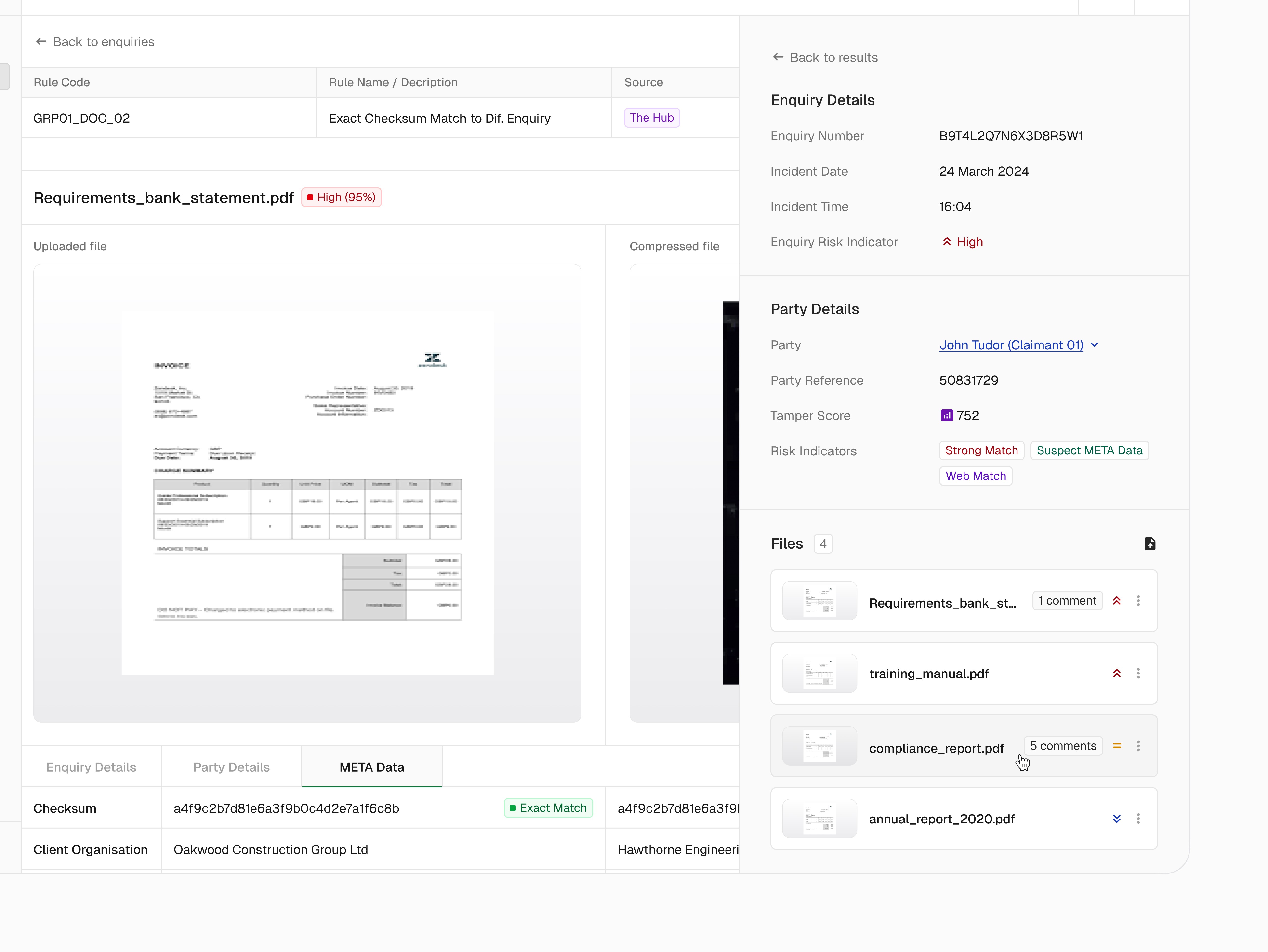
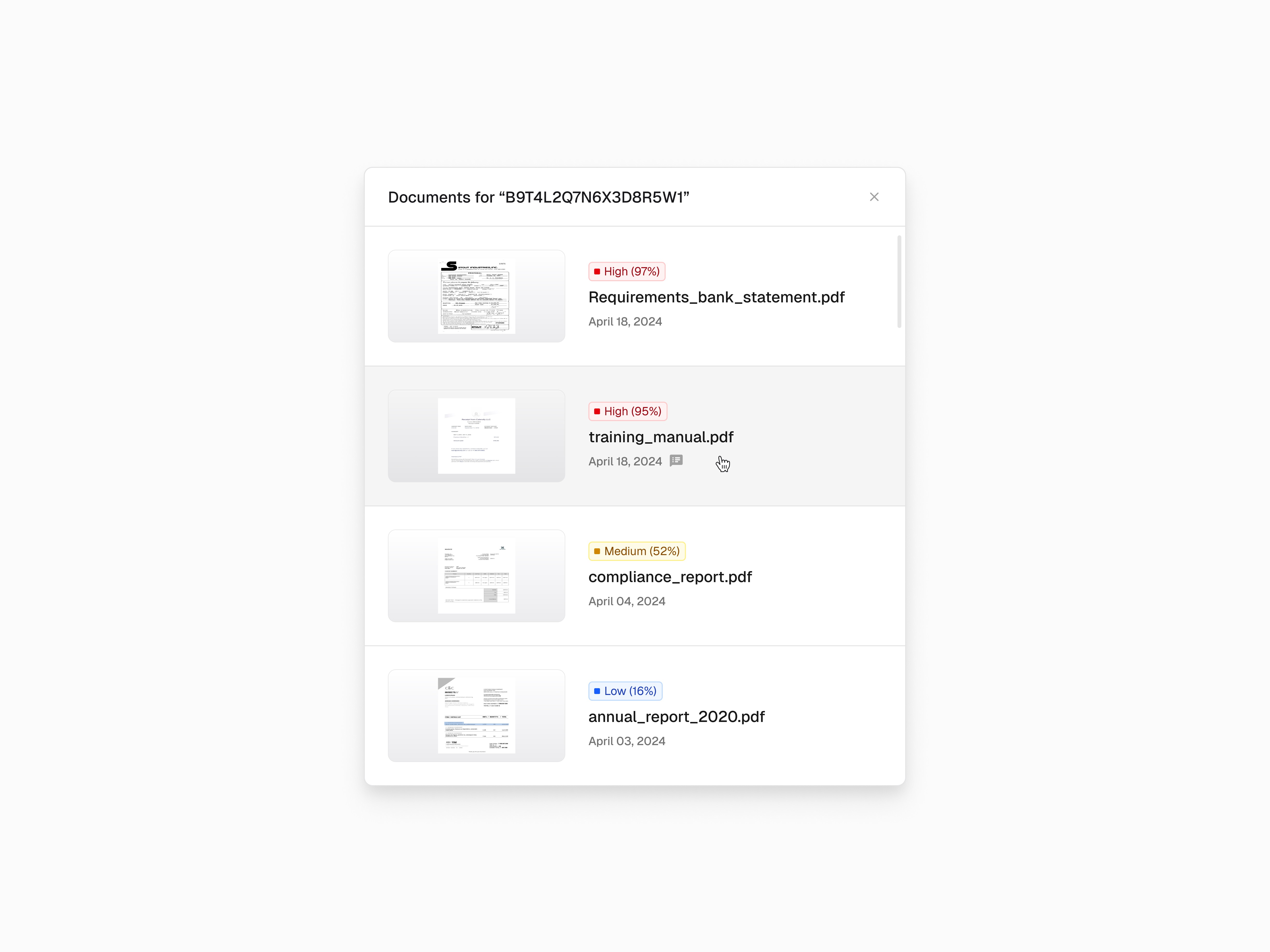
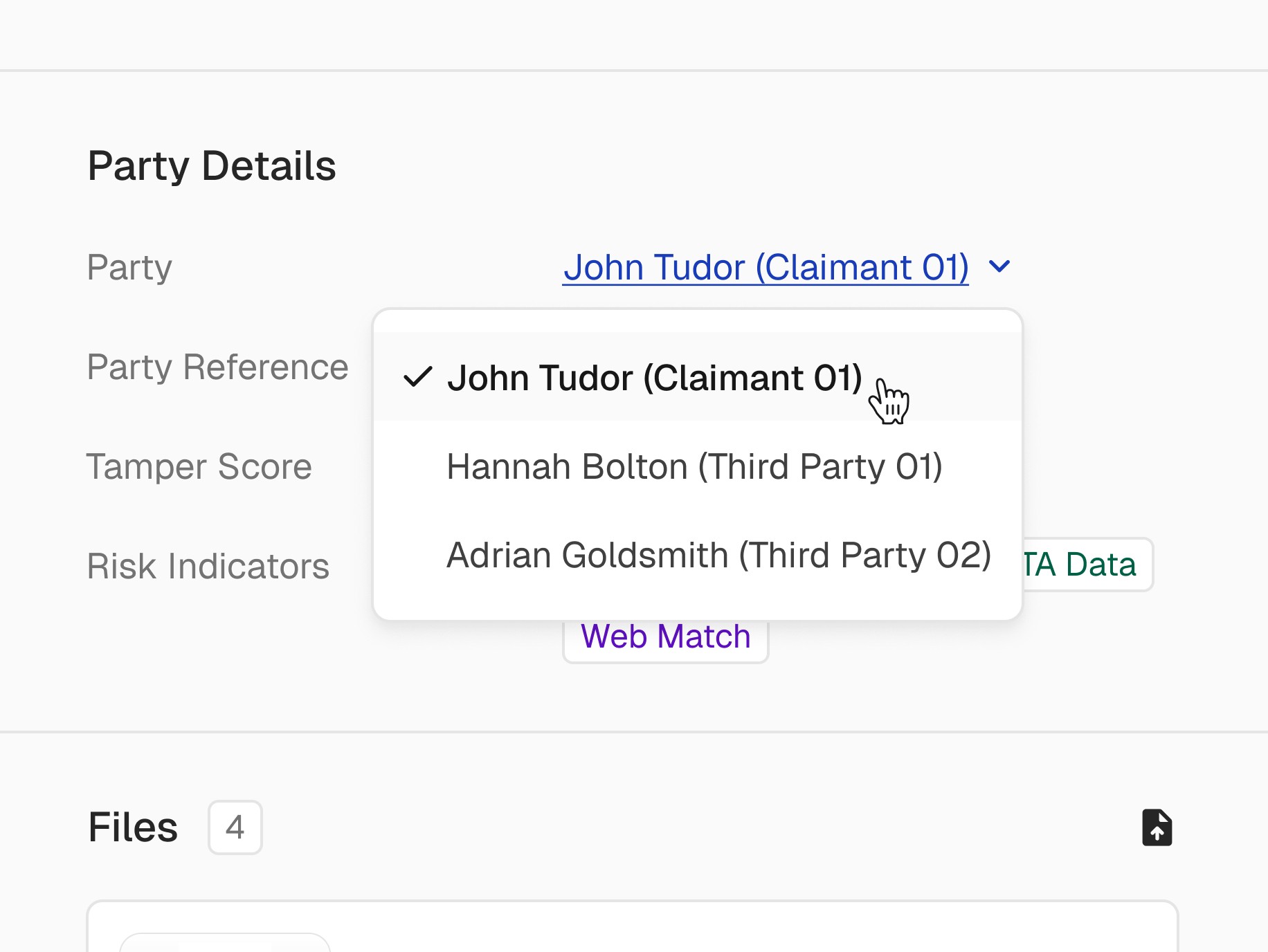
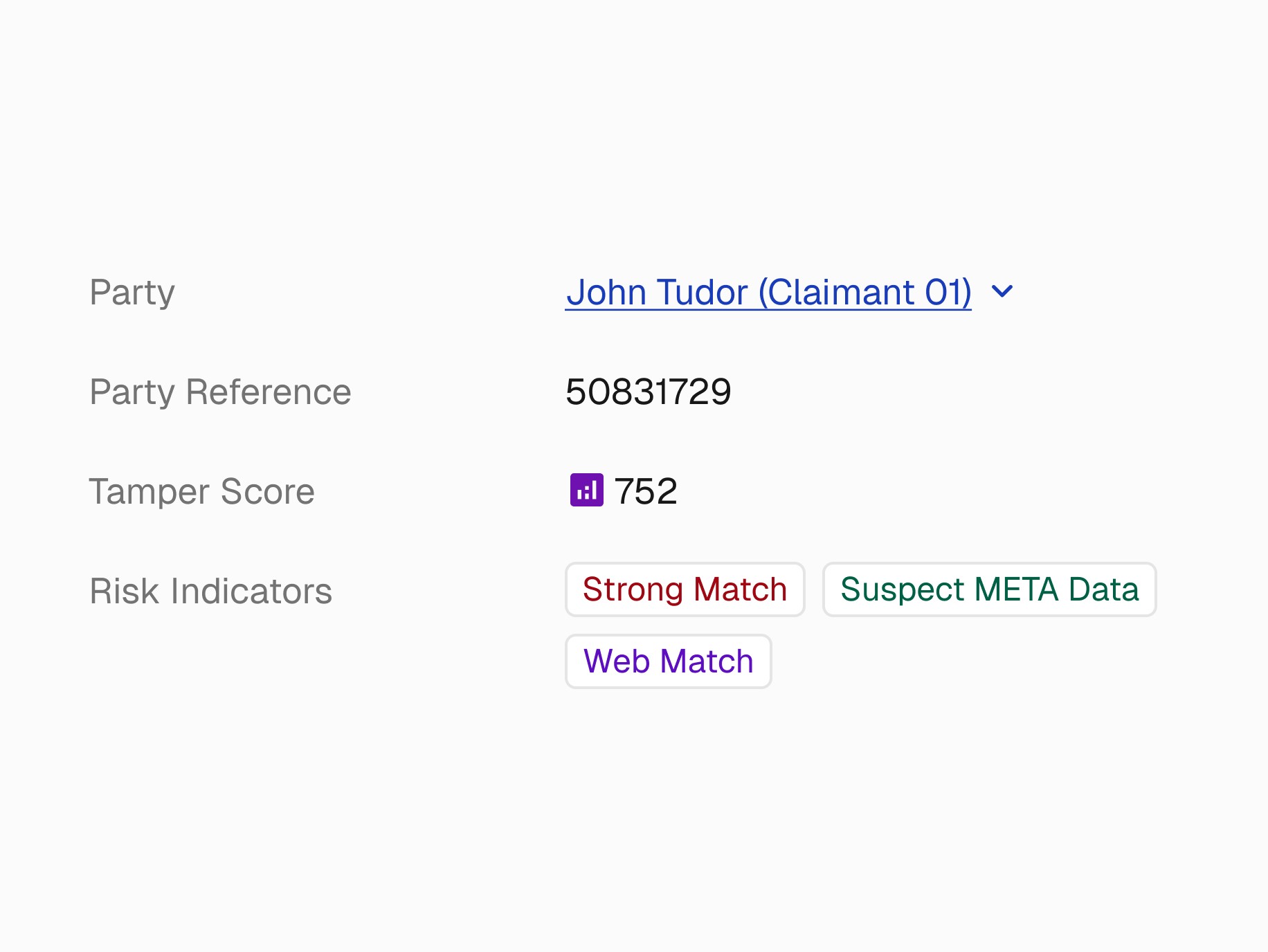
The final solution delivers a simple interface structured around three key areas: Recent Enquiries, Match Results, and Enquiry Details.
Behind the scenes, AI performs an analysis, automatically linking enquiry documents from the integrated system and generating risk indicators based on detected potential anomalies. Investigators can easily locate the document and proceed to update the document status, manage enquiries, and upload additional documents to be analysed against the same case.
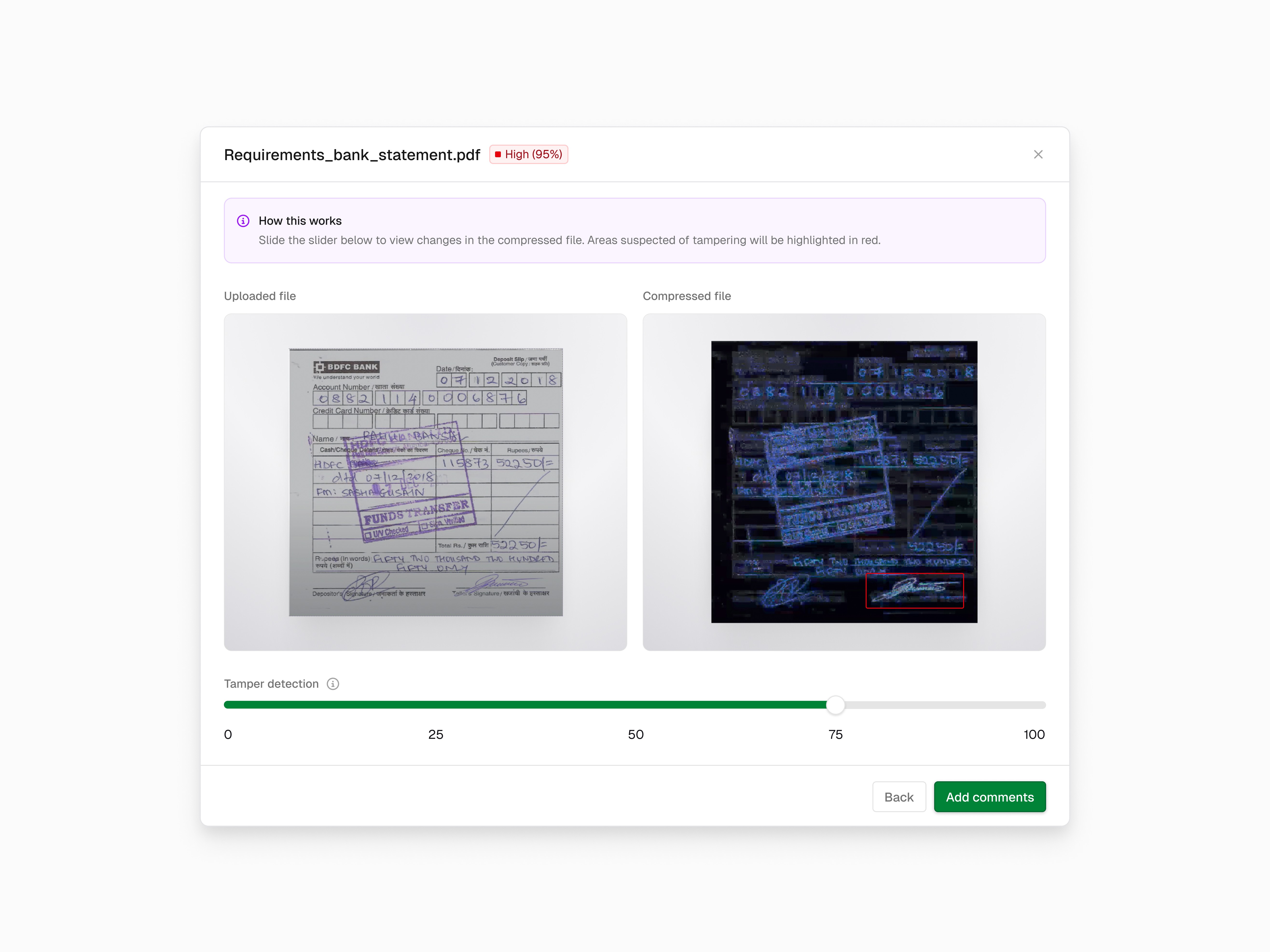
Within the match results area, the system highlights potential issues such as metadata inconsistencies, unusual formatting changes, and possible image manipulation. When tampering is suspected, the interface displays both the original document and a compressed view, with the model highlighting areas where manipulation has been identified.
The design focuses on efficiency and enables investigators to work faster and make informed decisions without having to leave the product.
increase in fraud detected vs. manual review
saved for a client in 1 year
uplift in detection of the highest-risk documents
Conclusion
The success of this new product came from starting the project with a clear understanding of our users’ needs. Throughout the process, we maintained close contact with key users that we had identified, whilst running small user-flow tests at different stages to ensure we were building the most intuitive user journey possible.
As a result, we improved all of the goals that we initially set out to achieve, reducing workflow time and presenting insights in a way that best supports the user.
Upon the project’s completion, we continued to schedule reviews with users to observe how their interactions with the product evolve over time. Alongside ongoing advancements in AI technology, we aim to keep exploring new opportunities for improvement, ensuring we continually push the product forward.
Personal Takeaways
The importance of gathering as much information as possible from the outset by collaborating closely with engineers to understand the true capabilities of the technology.
There were times when ideas from myself and the product team were shared with engineering, only to discover that the model did not yet have the capability to support them. While this initially felt like a limitation, it became a valuable learning experience for everyone involved. As designers, we naturally aim to create the ideal journey and interface, but sometimes compromises are necessary. This does not mean abandoning ideas altogether, it means understanding the current constraints and identifying opportunities to revisit them as the technology evolves.
Ultimately, the most rewarding part of the project is the feedback from users. Knowing that we have helped improve their daily workflow. These small improvements add up, creating meaningful impact for the business and the users of the product.
© Copyright 2026